The AI-Native Agent: Deepfake Closings, AI Disclosure Laws & 3 More Stories (July 2026)

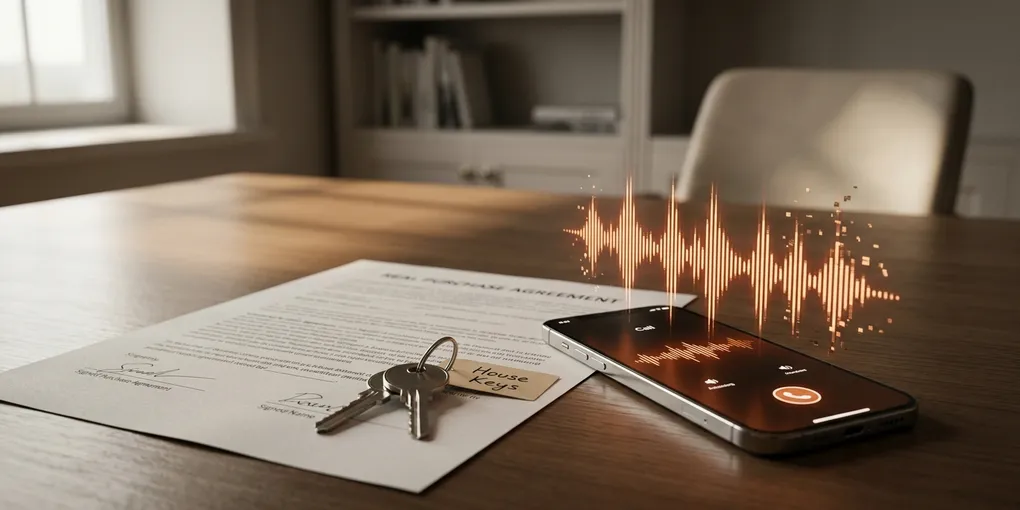
Another big couple of weeks for AI in residential real estate, and this one has a darker edge than usual.
Every week I round up the AI-in-real-estate stories that actually matter to a working agent, with my honest take on each. Here’s what caught my eye.
1. Deepfake fraud is moving to the closing table
The FBI’s Internet Crime Complaint Center clocked real estate wire fraud at $275 million in 2025, up from $173 million the year before. The new wrinkle is deepfakes: a scammer clones a voice from a few seconds of audio, pulled off a voicemail or a listing video, then impersonates the title officer or closing attorney to reroute the buyer’s wire. Studies show people catch high-quality synthetic audio only about a quarter of the time, so NAR just published a consumer guide on how to spot it.
My take: This one is serious. We spend most of our energy talking about AI as a growth tool, and we need to recognize it can be genuinely dangerous to our clients too. Real estate is one of the highest-value transactions in most people’s lives, and protecting them through it is part of the job now.
I’ll be honest, I don’t have a great answer yet, and whoever builds one is going to have a very successful business. Until then, the baseline is simple: don’t trust the voice on the call. Confirm wire instructions through a number and a person you set up ahead of time, and tell your clients to do the exact same.
2. The AI disclosure rules are here, and California made it criminal

California made it a misdemeanor, as of January 1, 2026, to alter a listing photo with AI without disclosing it. NAR is now updating MLS policy quarterly and requires virtual staging to be labeled, and AI-written listing copy can trip Fair Housing rules if it references protected classes. NAR is also lobbying for federal AI standards.
My take: I’ve been saying this for a long time. If you use AI on your photos or your virtual staging, disclose it. Simple as that.
California moved first, and it seems logical the rest will follow. Get ahead of it: label your AI and virtually staged images, keep the original photo on hand, and read the listing copy your AI writes before it ever goes live.
3. Your clients are pricing their homes with ChatGPT and Claude

CNBC reported that agents are seeing more buyers and sellers turn to ChatGPT and Claude to price homes and figure out what to offer. The models are strong, but a general tool still misses the local nuance: the up-and-coming block, the design details, the real feel of a neighborhood.
My take: Yet again, a platform is trying to price the home. This time it isn’t Zillow, it’s the AI, and honestly I have higher hopes for this one, because ChatGPT and Claude are powerful and good at pulling the right data.
But in a non-disclosure state like Texas, they don’t have the sold data you need for an accurate value, so the number can be way off. Consumers will lean on it anyway because it’s free and right there. So instead of fighting it, we should be figuring out how to plug our own service into ChatGPT and Claude, so we’re part of the answer our clients are already getting. And this is genuinely possible right now, so I’m going to start building it and get it into my clients’ hands soon.
4. An AI concierge jumped one agent’s time-on-site 6x

A luxury agent in Myrtle Beach, Rob Deaton, launched his website on something called the Phantom Realty Engine, with an AI assistant named Sarah that runs on live MLS data and anticipates what a buyer wants instead of making them search. In the first 30 days, time on his homepage went from 34 seconds to over three and a half minutes, a 6.4x jump.
My take: This is amazing, and I’m genuinely curious what Rob is doing. I’m going to go dig into this funnel myself.
This is how business gets conducted moving forward, and I don’t even mean the future, I mean now. Websites, buyer and seller discovery, all of it is going to run through AI. Your own site with your own AI on it is the front door I keep talking about, and it’s available to you today.
5. AI is starting to answer the calls agents miss

One 2026 analysis found that 47% of real estate leads never get a response, while the agent who replies first wins about 78% of the time. AI voice agents like Bland, Retell, and Aloware now pick up inbound calls in under a minute, qualify the lead, and drop it into your CRM. One caveat: the FCC treats AI calls as prerecorded, so you need consent for anything outbound.
My take: I think this is a genuinely good use of AI. Like I’ve said before, it does a better job than we can here for one simple reason: it’s available 24/7 and it never forgets a thing.
Half your leads never hearing back is a solved problem now. If you can’t answer fast, let the AI catch the ones you’d otherwise lose, then step in for the real conversation.
The throughline
Put the week together and you can see the whole transaction getting rebuilt around AI at once: the threat side, the rules side, the pricing side, and the opportunity side.
The agents who come out ahead won’t be the ones with the most tools. They’ll be the ones who understand this well enough to protect their clients, stay on the right side of the rules, and put AI to work inside their own service.
That’s the whole reason I do this every week.
P.S. Enrollment for the July Real Estate AI Bootcamp closed last week, but the waitlist for the next cohort is now open. Get on the waitlist here if you’d like to hear about it first.

Liked this article? Get more like it.
AI tools, prompts, and workflows that close deals — delivered in 5 minutes a week. Free, unsubscribe anytime.